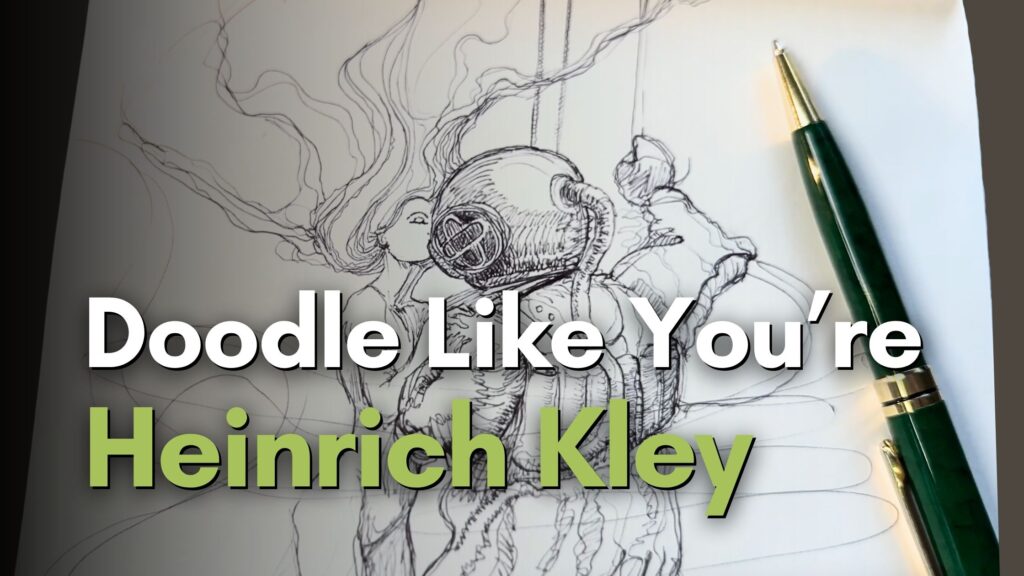
In this article, we’ll practice exercises inspired by the sketching methods of master Heinrich Kley.
Find out how his approach to drawing might affect how you spend your art time.
//DISCLOSURE: I earn a small commission when you use my affiliate links to make a purchase.
How to Doodle Like Heinrich Kley
Master Heinrich Kley is known for his spontaneous, scribbly style.
You may be familiar with Kley’s series of monsters, anthropomorphic characters, and, of course, the dancing elephants that inspired Walt Disney’s Fantasia.
The images for our exercises will be from what he called his “scrapbook”. These doodles were never intended to be seen by anyone, much less published.
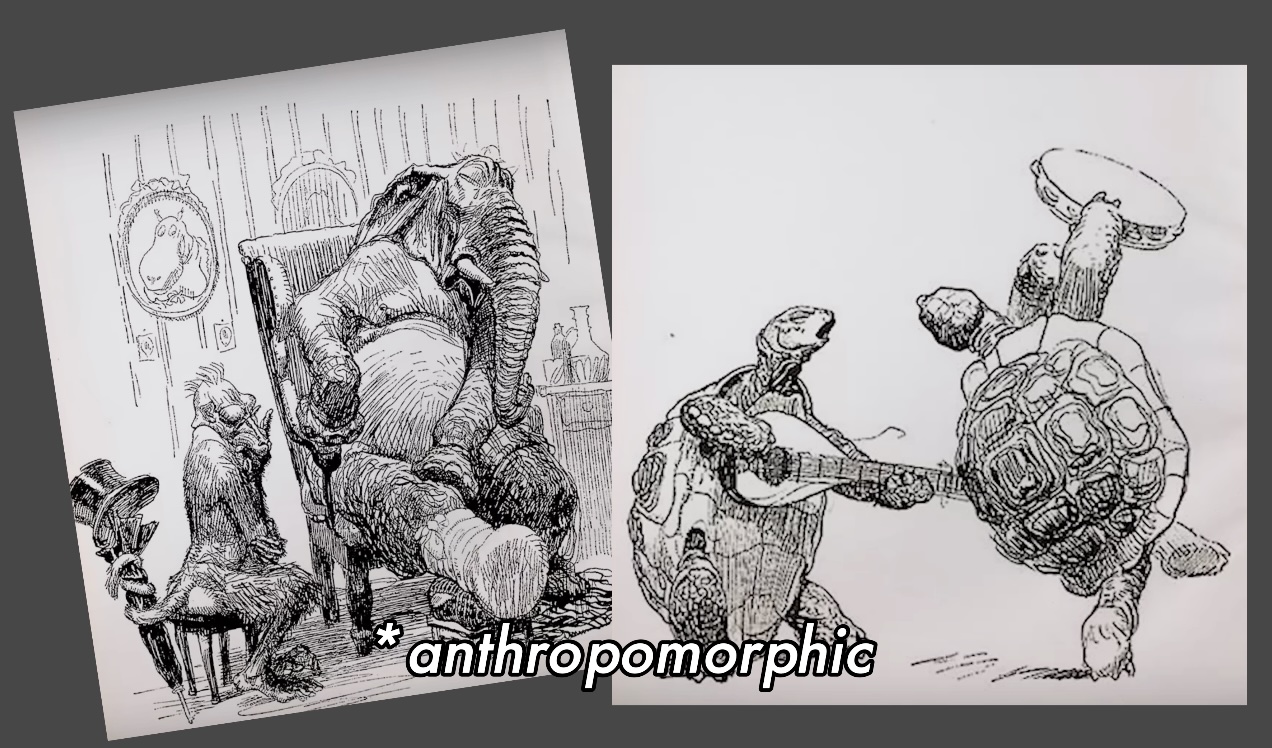
Sometimes, he would draw in graphite or charcoal if there was a character he wanted to explore further before inking it.
According to Marshall Vandruff from Proko, master Kley would repeat sketches over and over again as warmups and training. But the majority were drawn direct-to-ink, without an underdrawing, and from imagination, without references.
📖 Read “Directly to ink drawing exercises” for more practice ideas.
He also produced more polished illustrations in pen and ink, oils and watercolour.
🎥 Check out Pete Beard’s video to learn more about master Kley’s achievements.
As always, the resources and the materials are linked at the bottom section of this article.
The goal for our practice today is to take the same approach as master Kley.
We’re aiming to:
- Be spontaneous, without overthinking
- Let the imagination flow freely
It’s not about:
- Correctness of technique
- Or having a finished product
It’s strictly training.
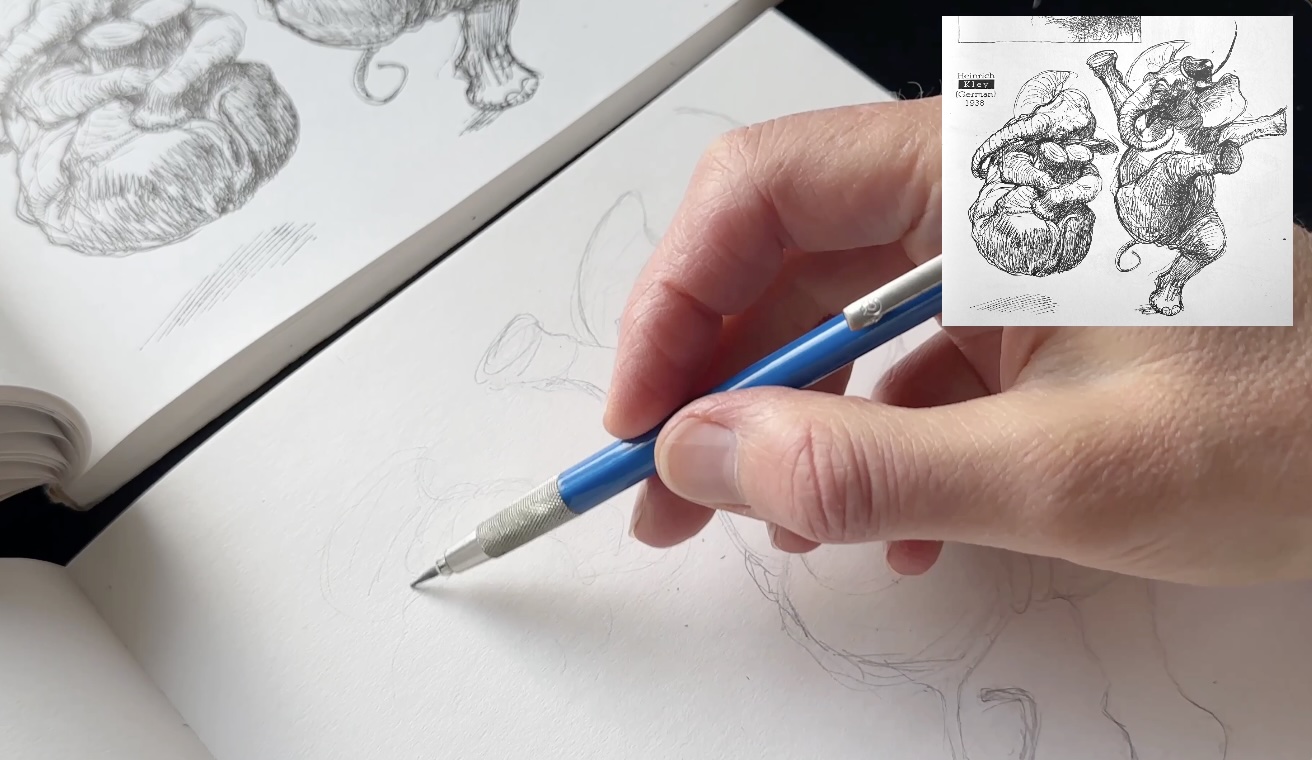
Step I – Copy the Master Doodle
The first step of our master study is to copy one of his scrapbook doodles.
We’ll start with an underdrawing to capture the main contour lines and some of the finding lines, keeping it loose.
For the ink application, I’m using a ball-point pen rather than a technical pen or dip pen, because ball-point pens are just perfect for making scribbles.
Marshall mentioned that Kley sketched with dip pens, which is impressive when you understand how nibs work. I imagine Kley ruined a lot of his nibs. I’d think a fountain pen would be more forgiving but they didn’t have those in the Golden Age era.
🎓 Want more on master studies or how to use dip pens? Check out my course page.
The idea is to keep the pen moving at all times.
The pen stays on the paper, never losing contact with the surface.
Apply the ink in a continuous twisty line, going over the areas that have darker values. No hesitation, no pause.
There’s no optimal path, it’s all about flow.
If, like me, your style has a more calculated approach to mark-making like masters Bernie Wrightson and Franklin Booth, who render with precise, planful strokes, then you’ll find these doodle exercises to be challenging.
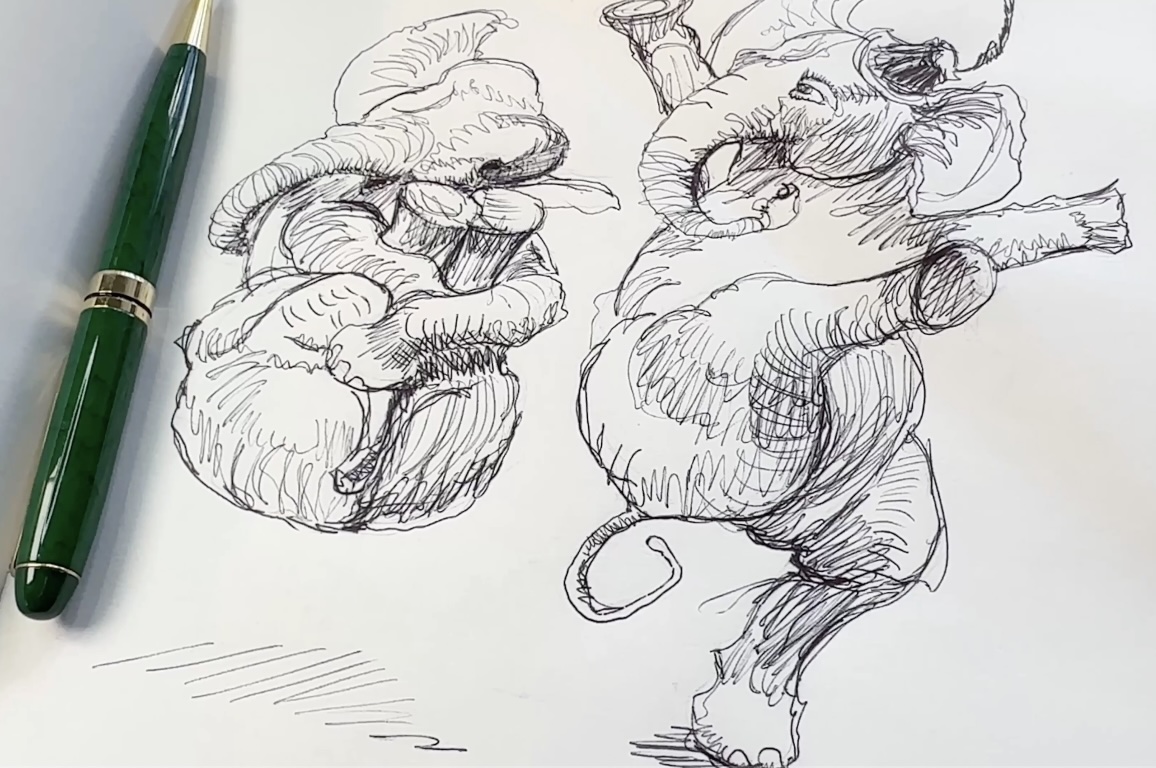
Step II – Sketch Using the Same Method
After copying his work, immediately sketch a similar subject from imagination, direct-to-ink.
Use the same method, a continuous line, keeping pen to paper.
Again, don’t worry about ‘correctness’ of anatomy or proportions, focus on letting your imagination move the pen.
Marshall calls it a rêverie, a daydream on paper.
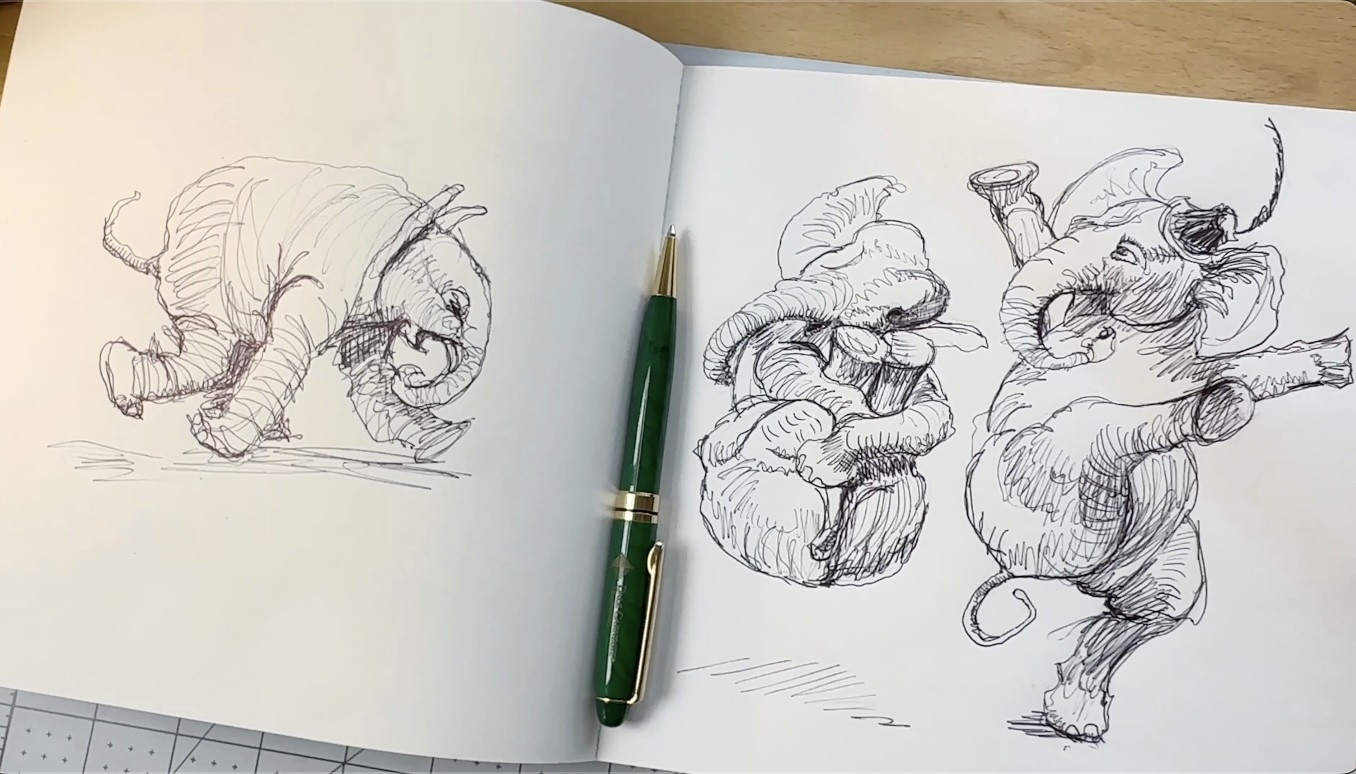
Repeat Step I and Step II
Then repeat the exercise with another image.
Same process, but this time, instead of just copying, aim to capture the spirit of the doodle in an unrestrained manner.
You’ll note that master Kley uses a lot of marks, but it looks effortless; the image appears like objects from the fog.
Then carry that energy into the next sketch. From memory, direct to ink, same as the previous exercise.
Repeat this process as many times as you like.
Try some of his more elaborate sketches.
📋 Check out the links and books in the resources section below for more Kley references.
Again, without lifting the pen. If you need to pause, only for a second, then keep going.
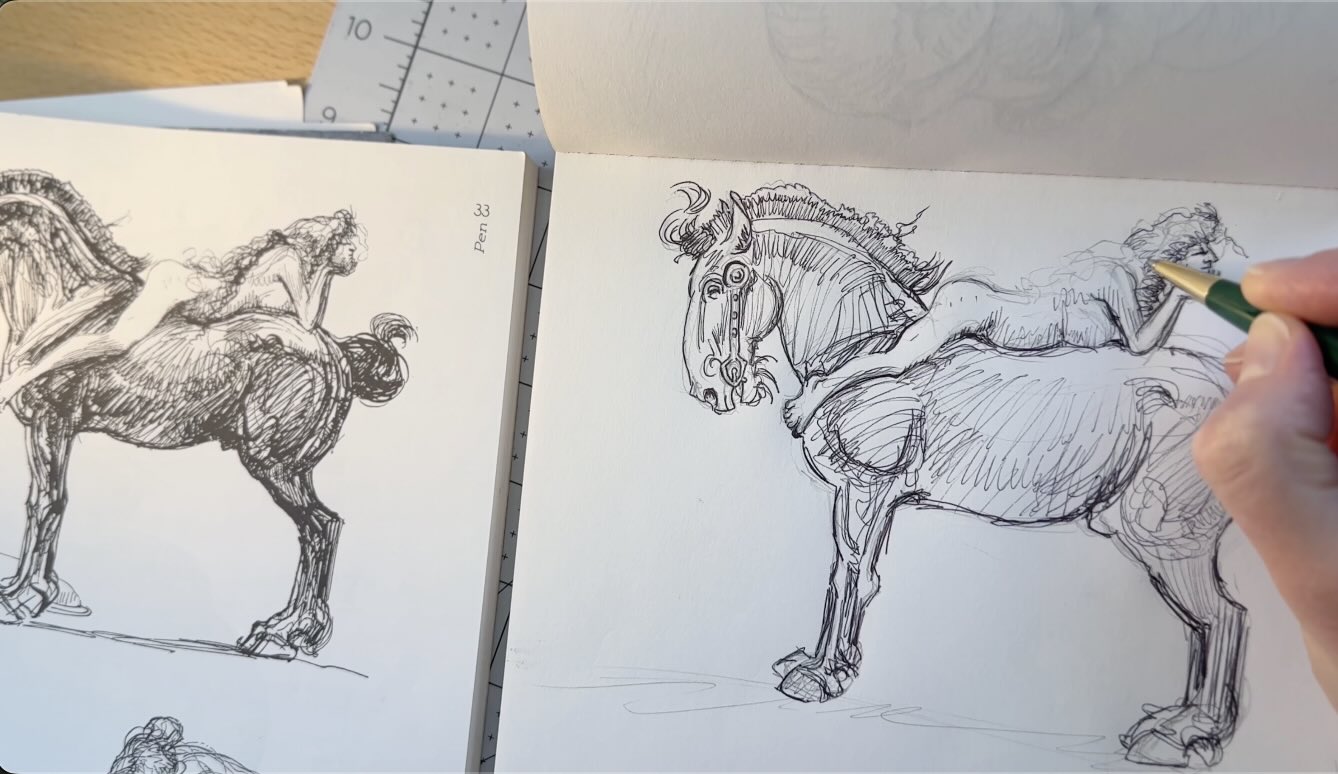
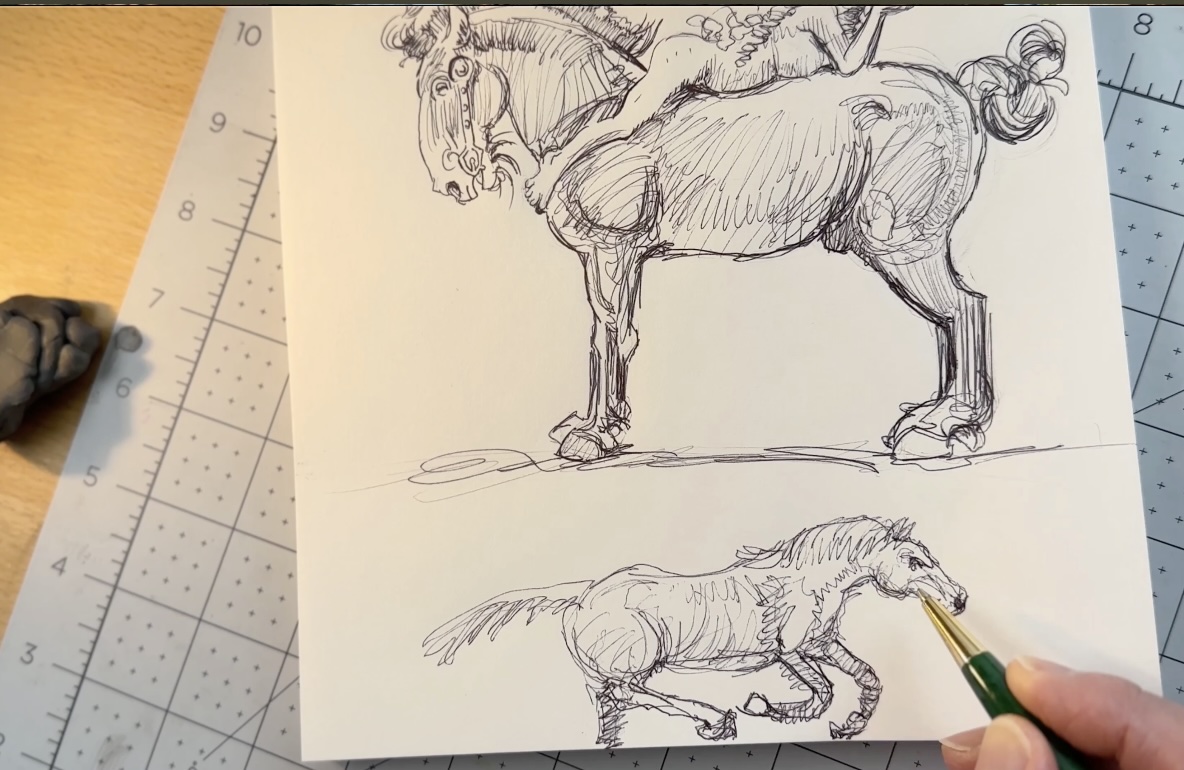
Forms, Values, and Marks
Now that you’re more familiar with the exercise process, shift your attention to how the master expressed the forms, values, and overall dynamics of the marks.
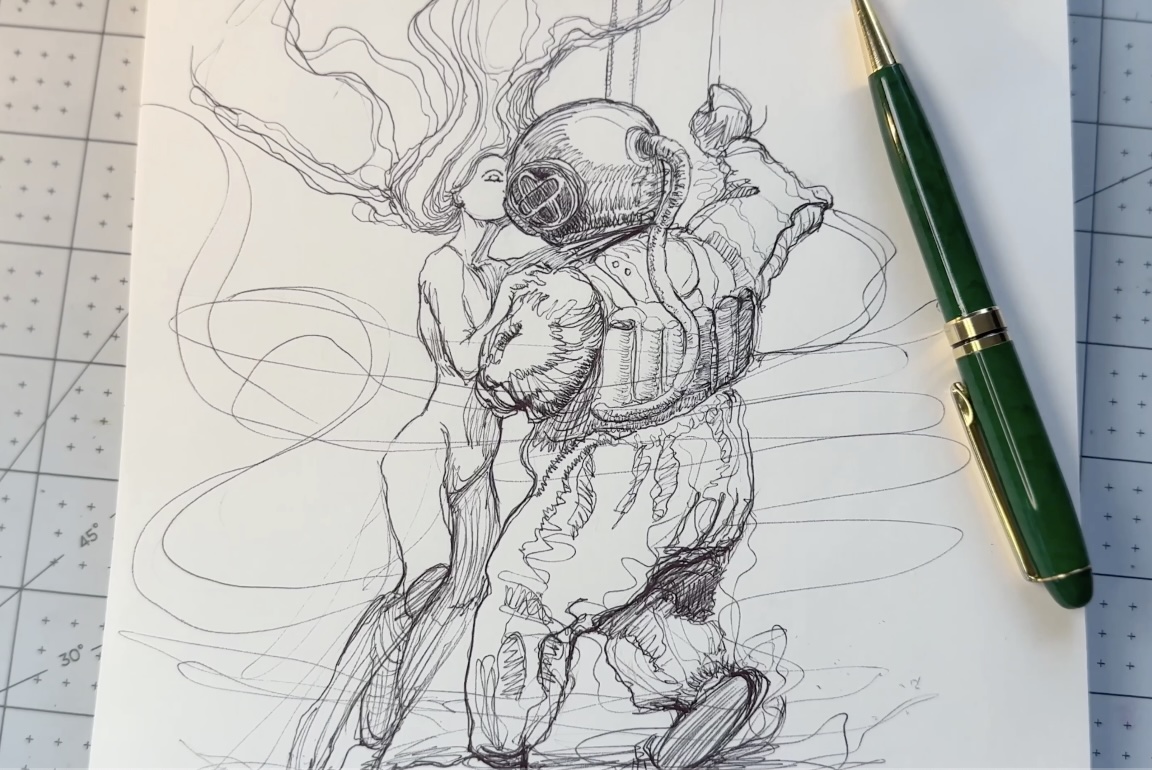
For this underwater scene, Master Kley either wanted to convey the slow suspended movement of being pressed under the sea, with this secondary set of animated lines here, or he simply inked all of the finding lines.
Either way, the effect is lovely.
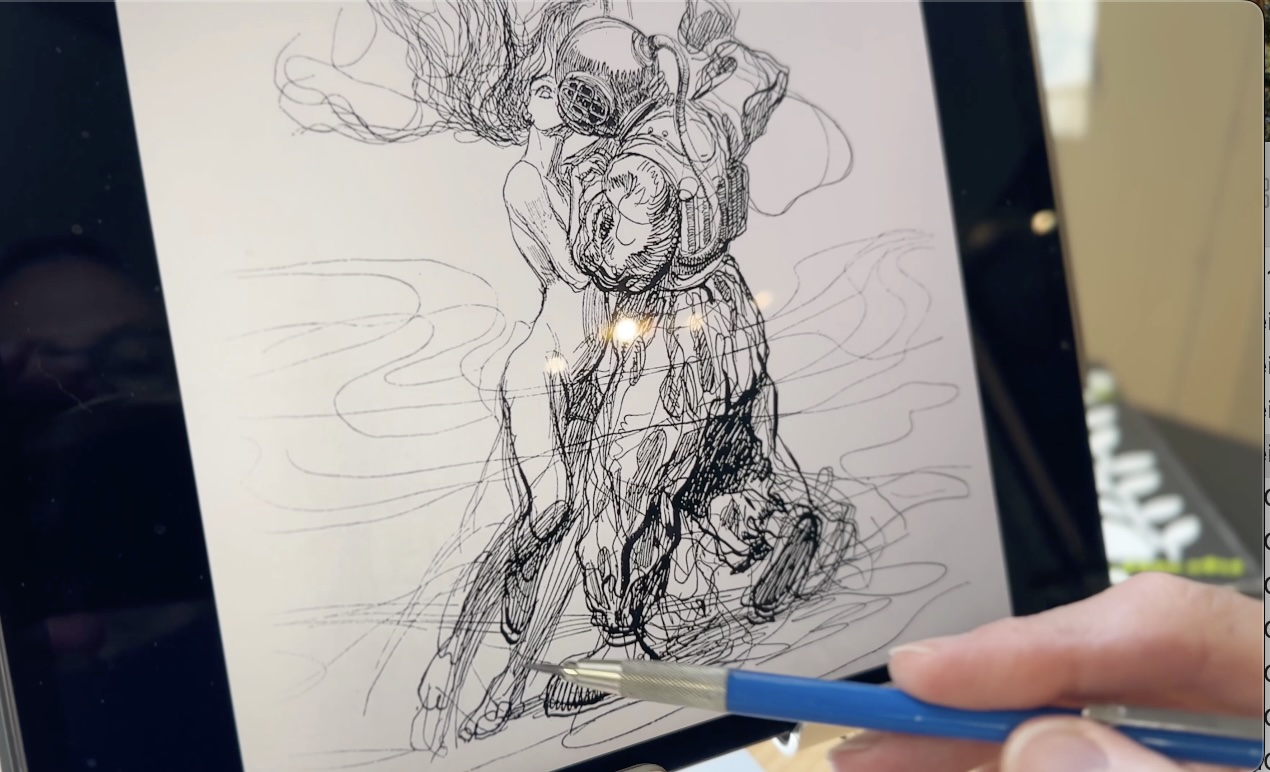
Marshall said that Kley would do the same subject hundreds of times.
There are no rules for how many times to repeat the steps.
As long as the intention remains clear, this is a training exercise.
You won’t get a well-drawn subject from doing this, but you’ll get your ideas down quickly.
The ideas that stand out can be further explored as thumbnail sketches, then refined for your illustration projects.
My key learnings from this master study of Heinrich Kley’s doodle process are to:
- dedicate more time to exploratory sketching; and
- be more deliberate with where I focus my time
I’d say Kley’s spent the majority of his art time on training, which helped him refine his technique, applying his talent to final projects.
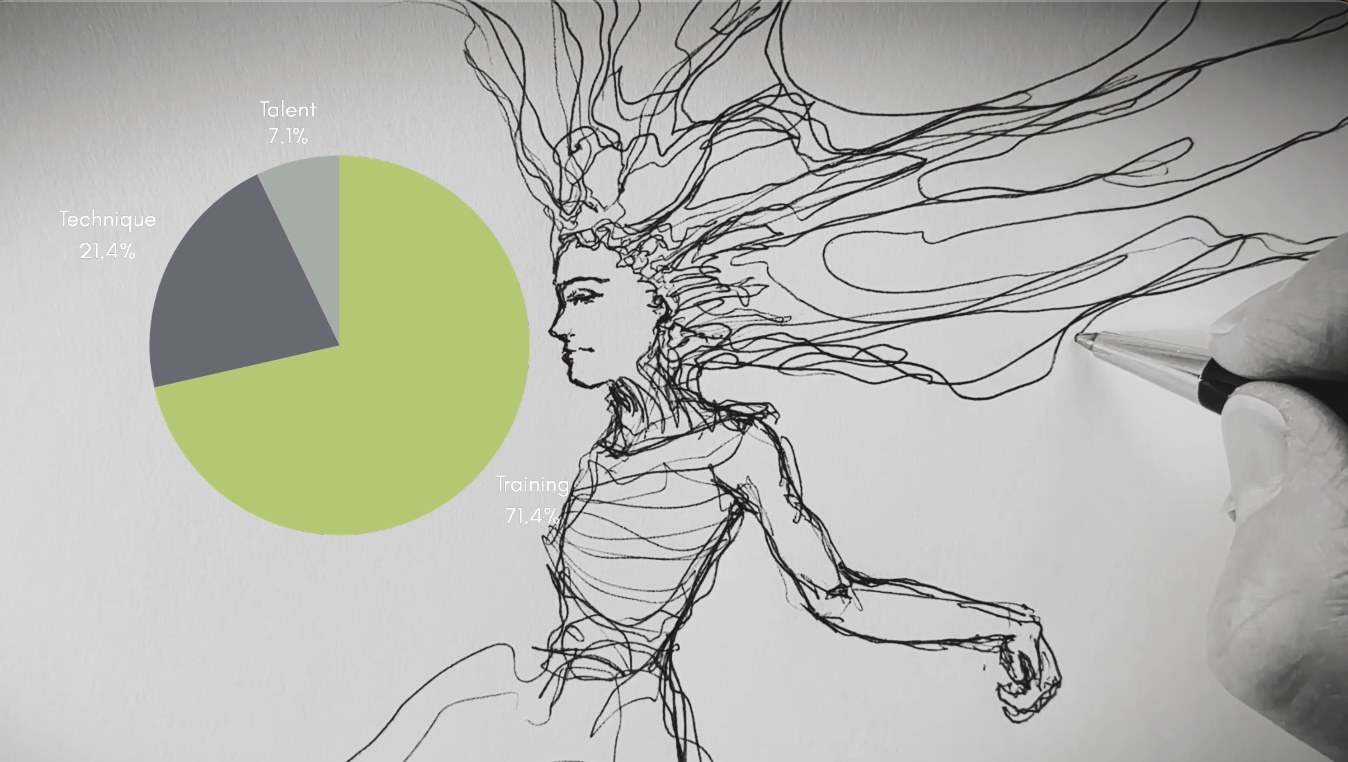
What I mean is that his foundation is distributed like the pie chart below.
Most of his energy is on developing through the repetition of ideas. And less concern about the accuracy of the execution, the technique.
Whereas most of us are over here (see pyramid).
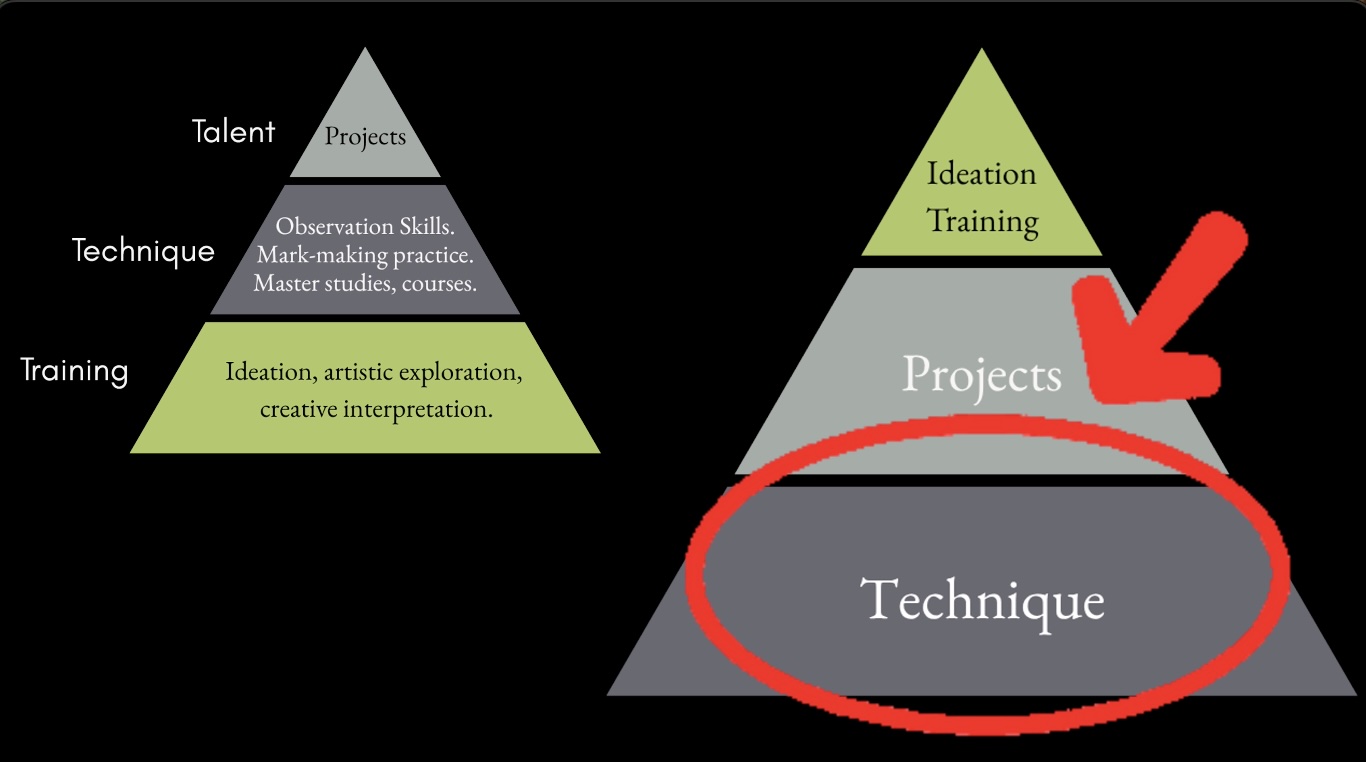
We’re super focused on technique, the medium, tools, and having a final product to show for. And so little time left over for training and exploration.
The key takeaway is to be more deliberate about the distribution of where we spend our art time.
These exercises made me more confident with doodling from imagination.
I wasn’t worried about committing lines to ink, because mistakes are encouraged, and no one except you and me will ever see these doodles.
Regardless of our influences or artistic aspirations, I find it valuable to review our approach for continuous growth.
I hope that you enjoyed this lesson with master Heinrich Kley, if you did, be sure to subscribe to my newsletter so you never miss a blog post.
I wish you the best with your training!


Resources
🎥 Videos ↓↓
- Heinrich Kley Sketchbook with Proko
- Heinrich Kley Illustrations with Pete Beard
- Heinrich Kley Analysis with Marshall Vandruff
📗 Books ↓↓
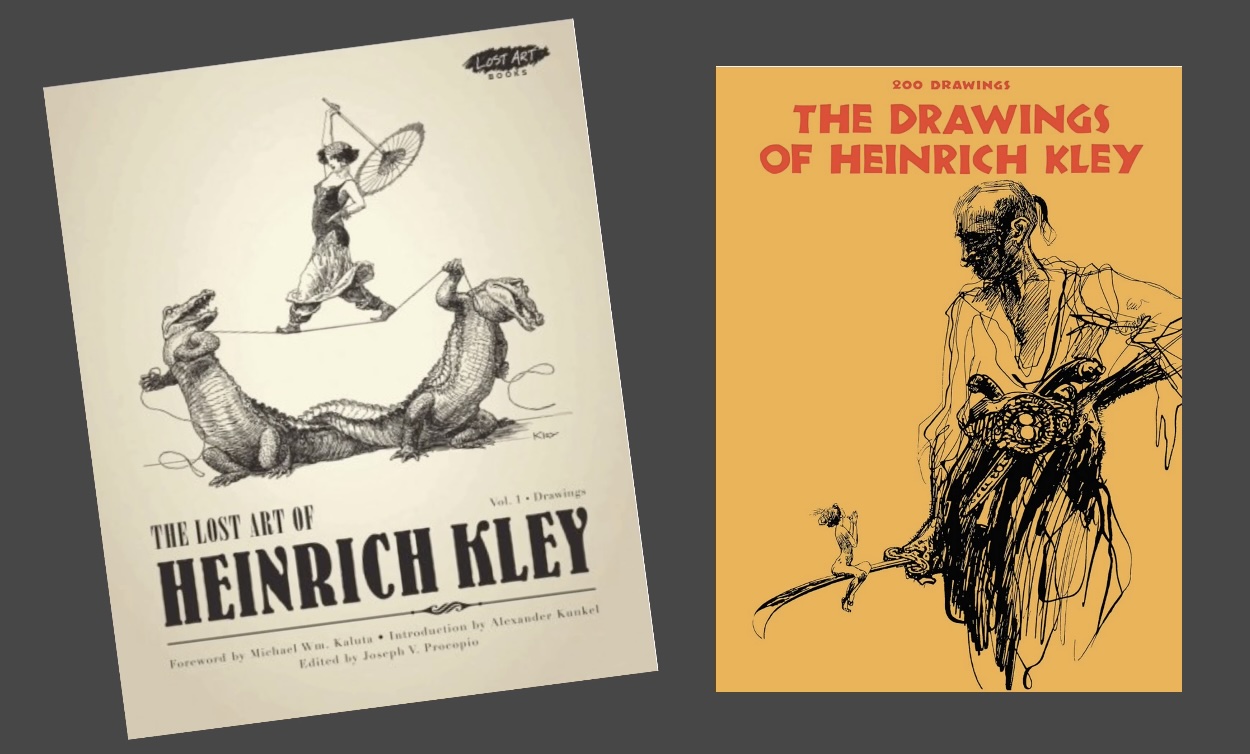
The Lost Art of Heinrich Kley, Volume 1: Drawings
🎓 Courses ↓↓↓
On Proko (Heinrich Kley w/Marshall)
✒️Tools ↓↓↓